
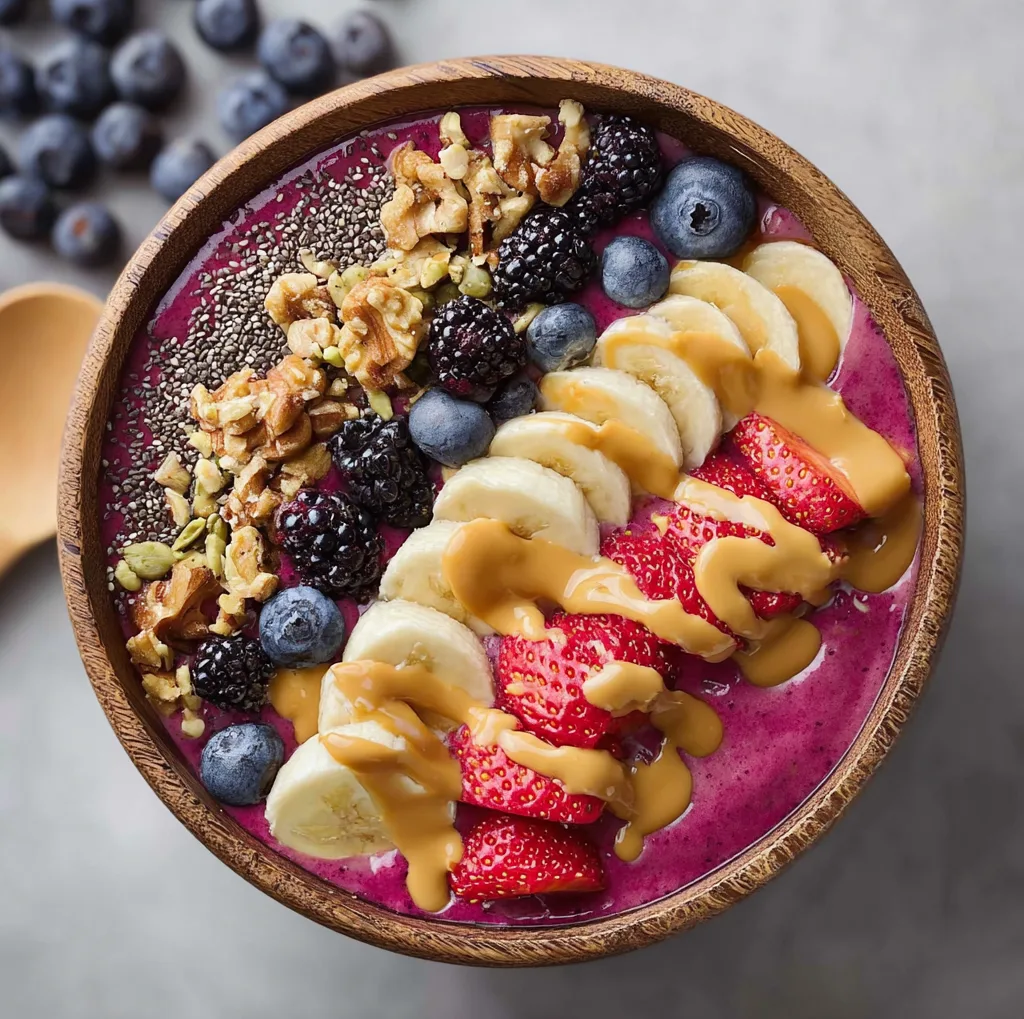
A smoothie bowl recipe blends frozen fruit, a splash of liquid, and nutrient-rich add-ins into a thick, spoonable base. Unlike traditional smoothies, this version is made to be eaten with a spoon and topped with colorful ingredients like nuts, seeds, and berries. A great smoothie bowl recipe starts with a frozen fruit base such as bananas, berries, or mango combined with minimal liquid to create a creamy consistency. Whether you’re after a low cal smoothie, a vegan smoothie option, or a protein smoothie bowl, the possibilities are endless. These bowls offer a quick and healthy way to enjoy a blender breakfast that’s rich in fiber, antioxidants, and flavor.
Try pairing your bowl with our Cottage Cheese Banana Bread for a complete, protein-rich breakfast.
In This Recipe
In This Recipe
How to Make Smoothie Bowl Recipe at Home
To create the ideal smoothie bowl recipe, start with a balance of frozen ingredients and minimal liquid. The core trio includes a frozen fruit base, a small amount of plant-based milk or juice, and optional nutritional add-ins. This trio gives you the creamy texture that defines a great blender breakfast.
PrintSmoothie Bowl Recipe
- Prep Time: 10 minutes
- Total Time: 10 minutes
- Yield: 2–3 bowls 1x
- Category: Breakfast, Snack
- Cuisine: American
- Diet: Vegetarian
Ingredients
For the base:
- 1 frozen banana
- 1 cup frozen mixed berries
- ¼–½ cup unsweetened almond milk (or oat milk)
- 1 tablespoon chia seeds (optional)
- 1 tablespoon almond butter or peanut butter (optional)
Suggested Toppings:
- Fresh berries (blueberries, strawberries, raspberries)
- Sliced banana or kiwi
- Chopped almonds or walnuts
- Pumpkin or sunflower seeds
- Coconut flakes
- Granola
Instructions
- Add the frozen banana and mixed berries to your blender.
- Pour in ¼ cup almond milk to start.
- Add chia seeds and nut butter if using.
- Blend using the pulse setting. Stop and stir as needed.
- Add small splashes of liquid only if necessary.
- Once thick and creamy, pour into bowls.
- Smooth the top and add your favorite toppings.
- Serve immediately and enjoy your colorful morning meal!
Notes
- Use a high-powered blender for best texture.
- For a protein boost, add a scoop of vegan protein powder.
- Keep ingredients prepped in freezer bags for quick blending.
Pro Tips to Adjust Texture On the Fly
- Too thick? Add 1–2 teaspoons more liquid at a time.
- Too thin? Add a few extra chunks of frozen banana or mango.
- Avoid overblending to keep the texture dense and cold.
- Use a high-powered blender or one made for thick mixtures.
Once your base is done, it’s time to get creative with toppings but first, let’s explore your ingredient options in the next section.
Best Ingredients & Base Options for Smoothie Bowl
Frozen Fruit Base Essentials
Every good smoothie bowl recipe starts with a dependable frozen fruit base. Frozen bananas are a staple, offering sweetness and creaminess. Combine them with frozen berries, mango, pineapple, or peaches for variety and depth. A classic berry smoothie bowl blends frozen blueberries, strawberries, and raspberries for a tangy, antioxidant-rich profile.
For a flavor twist, check out our Pineapple and Spinach Smoothie.
Acai Alternative Bowl Ideas
While acai is a popular pick, it’s not the only option. You can easily create an acai alternative bowl using mixed berries or pitaya (dragon fruit), which provides a similar texture and vibrant color. Blending in a spoonful of acai powder or frozen açai purée is optional not essential for a delicious result or try our Mango Coconut Water Smoothie for a refreshing base alternative.
Best Liquids to Use in a Blender Breakfast
To maintain the thickness of your smoothie bowl recipe, use only a small splash of liquid. Ideal choices include unsweetened almond milk, oat milk, coconut water, or a splash of 100% fruit juice. These work well in your blender breakfast without adding excess sugar or watering down the bowl.
Nutritious Add-Ins and Boosters
Boost your bowl’s benefits with nutrient-dense mix-ins like:
- Chia or flax seeds for fiber and omega-3s
- Nut butters (like almond or peanut) for healthy fats
- Protein powder for a protein smoothie bowl
- Spinach or kale for a green boost (won’t overpower fruit flavor)
- Cocoa or matcha powder for flavor and antioxidants
These additions allow you to turn any basic blend into a customized colorful morning meal, tailored to your taste and goals.
How to Make Smoothie Bowl Thick & Creamy
Why Thickness Matters in a Smoothie Bowl Recipe
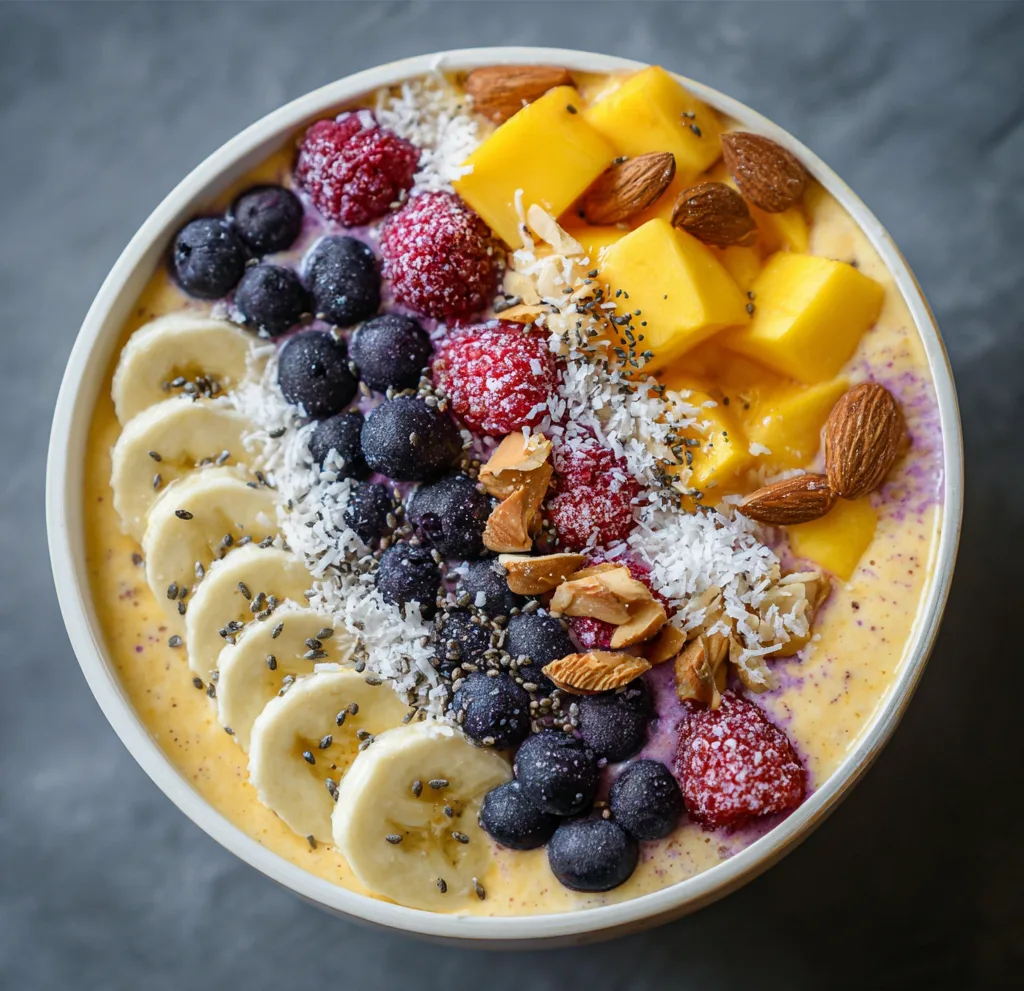
The perfect smoothie bowl recipe has a texture thick enough to hold your toppings in place. If it’s too thin, you’ll end up with more of a drink than a spoonable treat. The secret to a creamy, rich consistency lies in the right technique and ingredients.
Use More Frozen Fruit, Less Liquid
Always lean on the frozen fruit base to create that rich, dense texture. Frozen bananas are especially creamy, while mango and berries bring body and flavor. Keep your liquid minimal usually no more than ¼ to ½ cup to ensure a spoonable thickness.
Smart Additions for Extra Creaminess
To enhance the texture without diluting flavor:
- Add ¼ of an avocado (great for a vegan smoothie option)
- Use a frozen zucchini or cauliflower for creaminess without taste
- Toss in 1–2 tablespoons of oats or cooked quinoa for bulk
- Try nut butter or chia seeds for richness and texture
Each of these options enhances the texture while aligning with a nutrient-dense smoothie bowl recipe.
Pulse Blending: The Secret Move
Instead of running your blender on high, use pulse settings. Blend in short bursts and stop to stir between rounds. This prevents overheating the mix and keeps your blender breakfast bowl dense and scoopable.
Pro Tips to Thicken a Too-Thin Bowl
If your blend comes out too runny:
- Add more frozen fruit, especially banana or mango
- Toss in a few ice cubes
- Add a small spoonful of nut butter or protein powder
- Chill the mixture for a few minutes before serving
A thick, luxurious bowl is what elevates a basic blend into a craveable smoothie bowl recipe you’ll want to remake again and again.
Are Smoothie Bowls Healthy & Good for Weight Loss?
Nutritional Benefits of a Smoothie Bowl Recipe
A well-balanced smoothie bowl recipe can be incredibly nutrient-dense. When built with whole ingredients like fruit, nuts, seeds, and greens, it provides fiber, antioxidants, healthy fats, and essential vitamins. Using a frozen fruit base ensures natural sweetness without added sugars, making it a smart blender breakfast option.
Calorie Count: What to Expect
The calorie range for a typical bowl varies based on ingredients and toppings. A basic fruit bowl might run 250–400 calories, while a protein smoothie bowl with nut butter, seeds, or granola may land closer to 500–600 calories. For a low cal smoothie, choose fewer toppings and stick with water or unsweetened almond milk as your liquid.
Smoothie Bowls for Weight Loss: Yes or No?
Yes If done right. For weight-conscious goals, your smoothie bowl recipe should:
- Focus on high-fiber fruit like berries
- Include protein (like Greek yogurt or vegan powder)
- Avoid sugary juices or syrups
- Use controlled portions of toppings (e.g., 1 tbsp of nut butter, not 3)
By watching portion sizes and ingredients, you can enjoy a filling colorful morning meal without overdoing it.
Vegan & Low-Calorie Options That Work
A vegan smoothie option is easy to build just avoid dairy and use plant-based milk. Keep it light with frozen banana, spinach, and berries, then top with sliced fruit and seeds. You’ll get plenty of fiber, flavor, and visual appeal, with calories still in check.
Whether you’re looking for weight loss, energy, or just a satisfying breakfast, a homemade smoothie bowl recipe gives you total control over what goes in your bowl and what stays out.
Toppings, Mix‑Ins & Nut Topping Bowl Ideas
Why Toppings Matter in a Smoothie Bowl Recipe
The toppings aren’t just for looks they add crunch, flavor, and nutrients that elevate your smoothie bowl recipe. From nuts to seeds to fresh fruit, toppings help transform your blend into a fully satisfying, topped smoothie breakfast.
Crunchy Favorites: Nuts, Seeds, and Granola
Start with a crunch layer. Here are smart, tasty options:
- Nut topping bowl ideas: almonds, walnuts, pecans (chopped or sliced)
- Seeds: chia, hemp, flax, pumpkin, sunflower
- Granola: just 2–3 tablespoons for texture, not excess sugar
These boost satiety and protein while keeping your bowl grounded and nutrient-dense.
Fresh Fruit for Brightness and Sweetness
Top with slices of banana, kiwi, mango, strawberries, or blueberries. A berry smoothie bowl base with fresh berries on top gives both flavor and visual punch. Try layering for that signature colorful morning meal look.
Superfood Toppers & Drizzles
If you want to level up your smoothie bowl recipe, try adding:
- Coconut flakes or cacao nibs for texture
- A swirl of almond or peanut butter
- A drizzle of honey or date syrup (sparingly)
- Spirulina, maca, or matcha powder for added health perks
These mix-ins make each bowl feel custom-made perfect for experimenting or feeding picky eaters.
Need ideas for toppings? Our Chia Seed Pudding with Yogurt adds both taste and texture.
Balanced Bowl Tip
Keep toppings in proportion. Aim for no more than ½ cup total, with a mix of textures crunchy, creamy, juicy. This keeps the smoothie bowl recipe fun and nourishing without tipping into dessert territory.
Savory Smoothie Bowl Options & Tips
Can a Smoothie Bowl Recipe Be Savory?
Absolutely. While most think of fruity blends, a smoothie bowl recipe doesn’t have to be sweet. Savory versions are growing in popularity as a refreshing, nutrient-dense alternative ideal for lunch or a savory brunch. Just like their sweet counterparts, these bowls start with a thick, creamy blender breakfast base, but feature veggies, herbs, and umami toppings.
Savory Base Ideas Using Frozen Veggies
Instead of a frozen fruit base, start with:
- Steamed then frozen cauliflower or zucchini
- Frozen peas or avocado for creaminess
- Spinach or kale for a nutrient punch
- Unsweetened plant milk or veggie broth as your liquid
These ingredients create a mild, neutral base that can be flavored to your liking.
You can also explore our Cottage Cheese Taco Bowl for a savory bowl option.
Flavorful Add‑Ins and Seasonings
Blend in savory elements such as:
- Garlic, lemon juice, or tahini
- Fresh herbs like cilantro, parsley, or basil
- Nutritional yeast for a cheesy vibe
- Spices like cumin or turmeric
The result? A creamy bowl that’s perfect for spooning and topping, minus the sweetness.
Savory Toppings That Work
Top your savory smoothie bowl recipe with:
- Sliced radish, cherry tomatoes, or cucumber
- Hemp seeds, toasted pepitas, or crushed walnuts
- A drizzle of olive oil or spicy chili crisp
- Microgreens or arugula for a peppery kick
These bowls make an excellent vegan smoothie option and can easily double as a light lunch or post-workout meal.
Savory smoothie bowls may not be the norm, but they’re a creative and nutritious way to expand your smoothie bowl recipe repertoire especially when you’re craving something different from the usual fruit-forward start.
Common Mistakes & Pro Tips for Smoothie Bowls
Mistake 1: Too Much Liquid
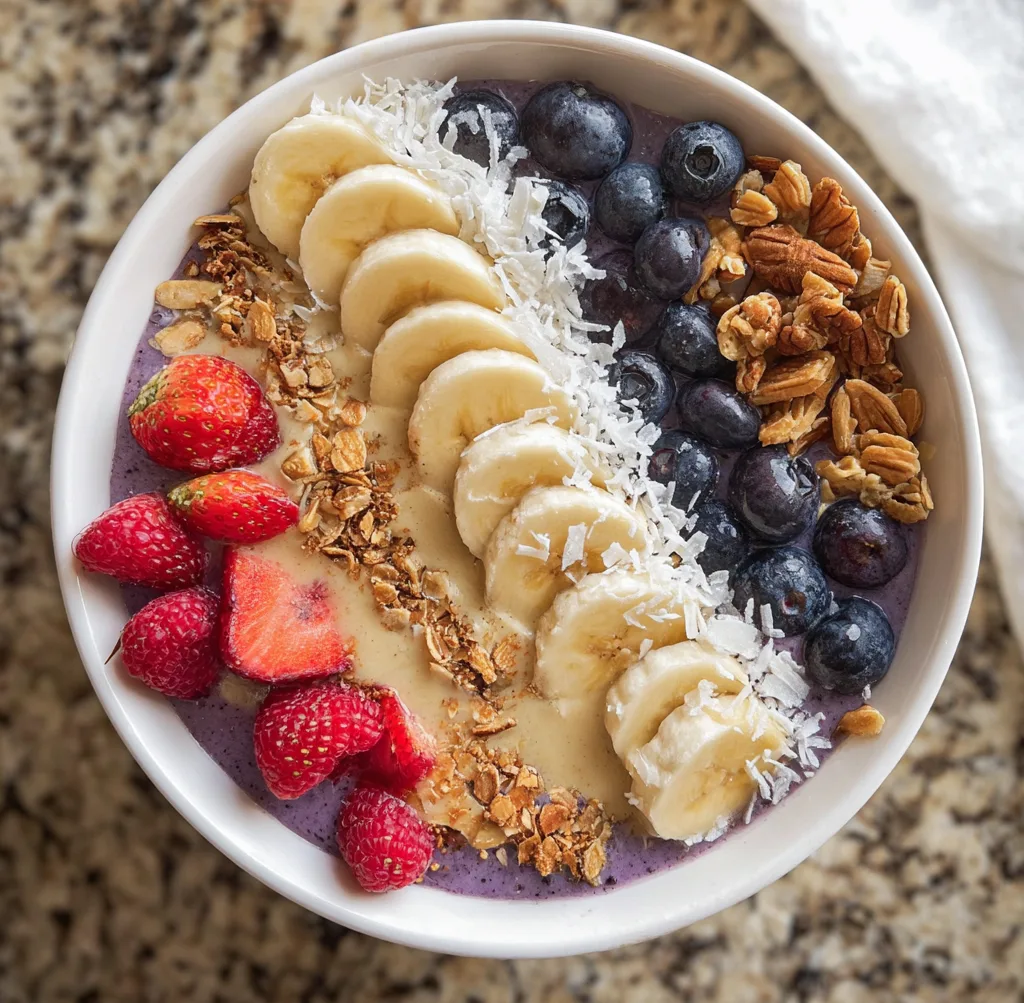
The most common mistake when making a smoothie bowl recipe is using too much liquid. This turns your spoonable bowl into a drinkable smoothie. The goal is a thick texture that can support toppings achievable only by limiting your liquid to just enough to blend.
Fix: Always start with ¼ cup and add only if your blender struggles.
Mistake 2: Skipping the Frozen Fruit Base
Using fresh fruit instead of a frozen fruit base results in a thin, soupy consistency. Frozen bananas, mango, and berries are essential for body and chill. Keep a stash of prepped fruit in your freezer for quick use.
Mistake 3: Unbalanced Ingredients
A good smoothie bowl recipe should offer a mix of carbs, protein, and fat. Skipping protein or overloading with sugary toppings (like too much granola or honey) can throw off your nutrition goals.
Fix: Add a scoop of protein powder or a tablespoon of nut butter to balance your blender breakfast.
The Rule of 3 for Smoothies
A handy guideline is the “Rule of 3”:
- Frozen fruit base
- Liquid (just enough)
- Booster like seeds, protein, or greens
This rule keeps your bowl simple, structured, and satisfying whether you’re building a vegan smoothie option, low cal smoothie, or protein-packed bowl.
Pro Tips for Success
- Layer ingredients for visual appeal and better blend flow.
- Use a tamper tool or stop and stir instead of over-blending.
- Top just before serving to keep crunch intact.
- Prep and freeze smoothie packs for fast morning assembly.
Avoiding these mistakes ensures every smoothie bowl recipe you make is thick, vibrant, and nourishing no soggy granola or flavorless blends here.
Sample Recipes & Variations
Berry Smoothie Bowl Recipe
A classic, crowd-pleasing smoothie bowl recipe that’s tangy, sweet, and loaded with antioxidants.
Ingredients:
- 1 frozen banana
- 1 cup frozen mixed berries
- ¼ cup unsweetened almond milk
- 1 tbsp chia seeds
- Toppings: fresh strawberries, blueberries, sliced almonds, granola
Blend base ingredients until thick, pour into a bowl, and top generously.
Perfect as a topped smoothie breakfast, this bowl is also a gorgeous colorful morning meal.
Tropical Mango Pitaya Bowl (Acai Alternative Bowl)
Skip the acai with this vibrant acai alternative bowl using pitaya and mango.
Ingredients:
- 1 pack frozen pitaya
- ½ cup frozen mango
- 1 frozen banana
- ¼ cup coconut water
- Toppings: pineapple, coconut flakes, granola, hemp seeds
This is one of those fruit smoothie bowls recipes that tastes like summer in a spoon.
For another fruity blend, try our energizing Pineapple and Spinach Smoothie recipe.
Protein Power Smoothie Bowl
For a hearty, energizing protein smoothie bowl, add a boost without losing texture.
Ingredients:
- 1 frozen banana
- 1 cup frozen blueberries
- ½ scoop plant protein powder
- ¼ cup oat milk
- 1 tbsp peanut butter
- Toppings: banana slices, flax seeds, crushed peanuts
A favorite among blender breakfast lovers who want to stay full till lunch.
Want more high-protein options? Don’t miss our hearty High Protein Vegan Sandwiches.
Low Cal Green Vegan Smoothie Option
Light, refreshing, and perfect for a low cal smoothie or vegan smoothie option.
Ingredients:
- 1 frozen banana
- ½ cup frozen zucchini
- Handful of spinach
- ¼ cup almond milk
- 1 tbsp chia seeds
- Toppings: kiwi slices, pumpkin seeds, microgreens
Ideal when you want something nourishing that won’t weigh you down. Balance your day with our low-cal Cucumber Avocado Salad as a light lunch option.
These easy smoothie bowl recipes prove how versatile and delicious your morning can be. Whether you love berries, crave tropical flavors, or need protein-packed fuel, there’s a smoothie bowls recipe to match your vibe.
Frequently Asked Questions About Smoothie Bowls
How to make smoothie bowl thick?
Use a frozen fruit base like banana, mango, or berries, and limit your liquid to ¼–½ cup. Blend slowly and use a tamper or pulse setting to keep it thick. Add-ins like oats, chia seeds, or avocado can help thicken your smoothie bowl recipe without compromising taste.
Is smoothie bowl healthy for weight loss?
Yes If made with balance in mind. A good smoothie bowl recipe for weight loss includes high-fiber fruits, a protein source (like vegan protein powder or Greek yogurt), and limited toppings. Watch portions, and skip sugary add-ons like flavored syrups or excess granola.
What toppings for smoothie bowl?
Popular toppings include sliced fruit, granola, nuts, seeds, coconut flakes, and nut butter. Keep your topped smoothie breakfast varied and colorful, but limit high-calorie extras to maintain balance.
Can smoothie bowl be savory?
Absolutely! A savory smoothie bowl recipe uses ingredients like avocado, spinach, zucchini, herbs, and plant-based milk or broth. Top with vegetables, seeds, and a drizzle of olive oil for a satisfying, low-sugar option.
How many calories in smoothie bowl?
Calories depend on ingredients. A light smoothie bowl recipe can be 250–400 calories, while one with protein, nut butter, and granola may reach 500–600+. For a low cal smoothie, focus on fruit, greens, and light toppings.
Are smoothie bowls actually healthy?
Yes when made at home. They offer fiber, vitamins, antioxidants, and healthy fats. A DIY smoothie bowl recipe avoids added sugars found in many store-bought options, making it a wholesome blender breakfast.
What is the rule 3 for smoothies?
The Rule of 3 means using:
1. A frozen fruit base
2. Just enough liquid
3. One nutrient booster (like protein or seeds)
This rule ensures a balanced and easy smoothie bowl recipe every time.
What is a good base for a smoothie bowl?
Frozen banana is the most popular base, creating a creamy texture. Mango, berries, and pitaya are also great choices. Always use frozen fruit to keep your smoothie bowl recipe thick.
What are some common smoothie bowl mistakes?
Using too much liquid, skipping frozen fruit, and overloading toppings are common pitfalls. Follow basic ratios and stay true to your smoothie bowl recipe for the best results.
How to thicken a smoothie bowl?
Add more frozen fruit, a spoonful of nut butter, or a handful of oats. Using less liquid from the start also helps you achieve the right consistency in your smoothie bowl recipe.
What liquid to put in a smoothie bowl?
Use almond milk, oat milk, coconut water, or even plain water. Start with small amounts to avoid thinning out your smoothie bowl recipe.
What are the best ingredients for a smoothie?
Frozen fruit, leafy greens, plant-based milk, protein powder, seeds, and nut butter are top picks. These build a strong foundation for any smoothie bowl recipe, whether sweet or savory.
Conclusion
With the right blend of frozen fruits, just a splash of liquid, and a handful of nutritious toppings, creating your perfect smoothie bowl recipe at home is easier than ever. Whether you’re sticking with a berry classic, going tropical, or exploring savory ideas, you now have all the tools to build a bowl that fits your flavor and health goals. Take it further with this Best Homemade Weight Loss Drinks guide full of functional sips
Looking for even more inspiration? If you love healthy and simple recipes, follow Viva Lyze on Facebook to find daily wellness ideas and natural remedies. And if you’re a visual thinker, browse through our beautifully curated bowls and feel-good food on Viva Lyze on Pinterest it’s your next step to mastering your breakfast game.
Now grab your blender, stock up on frozen fruits, and get ready to make a smoothie bowl recipe that fuels your day from the first bite to the last spoonful and cool down with our Easy Healthy Cottage Cheese Ice Cream as a post-breakfast treat.