
Cottage cheese cookie dough is a creamy, high-protein dessert that’s quick to prepare and easy to customize. Made with cottage cheese, almond flour, and vanilla protein powder, it’s a gluten-free edible cookie dough that’s naturally sweetened with maple syrup or honey. This refined sugar-free treat delivers a healthier indulgence without compromising flavor, making it perfect for meal-prep or snacking. If you enjoy no-bake protein desserts, you’ll also love the Healthy Edible Cookie Dough recipe, a fan-favorite from Viva Lyze.
This edible no-bake cookie dough is packed with protein, low in carbs, and ideal for those following a keto-friendly or macro-conscious lifestyle. Whether you’re craving a dessert dip, a snack, or chocolate-chip cookie dough bites, cottage cheese cookie dough offers endless, customisable flavor variations that fit your needs.
For another nutrient-rich treat option, check out the easy healthy cottage cheese ice cream recipe.

In This Recipe
In This Recipe
How to Make Cottage Cheese Cookie Dough at Home?
Creating cottage cheese cookie dough at home is surprisingly simple, taking just a few minutes and a handful of nutrient-dense ingredients. Whether you’re aiming for a high-protein dessert, a quick snack, or a naturally sweetened treat, this edible no-bake cookie dough has you covered.
PrintCottage Cheese Cookie Dough Recipe

- Prep Time: 10 minutes
- Total Time: 10 minutes
- Yield: 4–6 servings 1x
- Category: Dessert, Snack
- Cuisine: American
- Diet: Gluten Free
Ingredients
- 1 cup full-fat cottage cheese (blended until smooth)
- ½ cup almond flour
- 1–2 scoops vanilla protein powder
- 2 tbsp natural nut butter (peanut, almond, or sunflower)
- 2 tbsp maple syrup or honey (or monk fruit for low-carb)
- ¼ tsp cinnamon (optional)
- 1 tsp vanilla extract
- Pinch of sea salt
- 2–3 tbsp mini chocolate chips or desired mix-ins
Instructions
- Blend the cottage cheese until completely smooth using a food processor or blender.
- In a mixing bowl, combine the almond flour, protein powder, cinnamon, salt, and mix-ins.
- Add in the blended cottage cheese, nut butter, sweetener, and vanilla. Stir until fully incorporated.
- Adjust texture if needed with more almond flour or a splash of almond milk.
- Serve immediately or chill for 15–30 minutes for a firmer bite.
- Store leftovers in an airtight container in the fridge for up to 5 days or freeze for 3 months.
Notes
- Use plant-based protein powder and dairy-free yogurt or tofu for a vegan version.
- For a nut-free recipe, swap almond flour for oat or sunflower seed flour, and use sunflower seed butter.
- Great as a meal-prep snack, dessert dip, or rolled into bites.
Ingredients You’ll Need
To make this healthy indulgence, you’ll need:
- Cottage cheese (full-fat for creaminess or low-fat for lighter macros)
- Almond flour : creates the ideal cookie dough texture while keeping it gluten-free
- Vanilla protein powder : boosts the protein content and helps bind the dough
- Maple syrup or honey : natural sweeteners that make this refined sugar-free
- Nut butter (like peanut or almond) : adds richness and flavor depth
- Mix-ins : chocolate chips, cinnamon, or snickerdoodle spice for variety
This blend not only delivers on flavor but makes your cottage cheese cookie dough rich in protein and customizable for different diets.
Step-by-Step Preparation Guide
- Blend the cottage cheese in a food processor or high-speed blender until completely smooth and creamy.
- In a bowl, mix almond flour and vanilla protein powder, then stir in the blended cottage cheese.
- Add maple syrup or honey, and your preferred nut butter, stirring until it becomes thick and dough-like.
- If your cottage cheese cookie dough is too runny, add more almond flour or protein powder gradually to thicken.
- Fold in your favorite mix-ins chocolate chips, a dash of cinnamon, or crushed nuts.
- Chill in the fridge for 10–15 minutes or enjoy right away.
This recipe is perfect for a quick & easy recipe that’s gluten-free, high in protein, and totally customizable.
Why It Works
The combination of creamy cottage cheese and almond flour creates the classic doughy texture you expect from a dessert dip. It’s a satisfying, macro-friendly alternative to traditional cookie dough that you can feel good about eating, no baking required.
Can You Bake It into Cookies or Is It Meant to Be Eaten Raw?
Cottage cheese cookie dough is specifically designed to be enjoyed raw as a no-bake, high-protein treat. Its creamy texture and safe-to-eat ingredients like almond flour, vanilla protein powder, and naturally sweetened maple syrup or honey make it ideal for spooning straight from the bowl or serving as a dessert dip.
Unlike traditional doughs, cottage cheese cookie dough doesn’t contain eggs or raw wheat flour, which means it’s safe to eat without baking. That’s one of the biggest benefits of this refined sugar-free treat: it’s instantly ready, no oven required.
What Happens If You Bake It?
If you choose to bake your cottage cheese cookie dough, expect a softer, more delicate cookie. Since it lacks the structure of eggs or leavening agents like baking soda, it won’t rise or firm up like traditional cookies. However, adding a small pinch of baking powder and slightly reducing the moisture (e.g., using less nut butter or syrup) can help it hold shape better during baking.
Best Use: Raw, Quick, and Customizable
While baking is possible with slight adjustments, cottage cheese cookie dough truly shines as a raw, edible snack. It’s fast to prepare, customizable with various flavor mix-ins, and serves as a satisfying healthier indulgence perfect for those craving something sweet, gluten-free, and high-protein without heating up the kitchen.
Storage Tips: How to Store Cottage Cheese Cookie Dough & Shelf Life
Once you’ve prepared your batch of cottage cheese cookie dough, storing it properly helps preserve its taste, texture, and nutritional benefits. Because this no-bake treat contains dairy and natural sweeteners, keeping it fresh is key to getting the most out of your healthy indulgence.

How to Store in the Fridge
Store your cottage cheese cookie dough in an airtight container in the refrigerator. It will stay fresh for up to 5 days, maintaining its creamy texture and flavor. The dough may firm up slightly as it chills just let it sit at room temperature for a few minutes before serving if you prefer a softer bite.
If your dough thickens too much, a splash of almond milk or a touch of nut butter can restore the original texture without altering the taste.
Can You Freeze It?
Yes! Cottage cheese cookie dough freezes exceptionally well. For best results, portion the dough into bite-sized balls or spoon it into a silicone mold. Freeze for up to 3 months. When ready to enjoy, let it thaw for 10–15 minutes at room temperature or defrost in the fridge overnight.
Freezing is ideal for meal-prep enthusiasts looking to keep this macro-friendly dessert dip on hand for fast, satisfying snacks.
Pro Tip for Longevity
To prevent flavor transfer or freezer burn, wrap your frozen cottage cheese cookie dough portions in parchment paper or place them inside a sealed freezer bag before storing in an airtight container.
This makes it easy to grab just what you need, when you need it keeping this high-protein snack fresh and ready to go.
Health Benefits – Is Cottage Cheese Cookie Dough Healthy or High in Protein?
Cottage cheese cookie dough is not only delicious but also a powerhouse when it comes to nutrition. This high-protein dessert is crafted with clean, whole-food ingredients that support energy levels, muscle repair, and balanced snacking. It’s especially popular among fitness enthusiasts and anyone seeking a healthier indulgence. (Medical News Today highlights the nutrition benefits of cottage cheese, including its high protein content, calcium, and probiotics that support gut health.)
High in Protein, Low in Guilt
The foundation of cottage cheese cookie dough, cottage cheese, almond flour, and vanilla protein powder creates a snack packed with protein and healthy fats. Cottage cheese alone delivers around 12–15 grams of protein per half cup, making this no-bake treat a satisfying, muscle-friendly option.
When paired with almond flour and a scoop of protein powder, you get a macro-friendly dessert that fuels your body and curbs sugar cravings, all while keeping carb counts in check.
Low-Carb, Keto-Friendly, and Gluten-Free
Thanks to ingredients like almond flour and natural sweeteners (such as maple syrup or honey), this cottage cheese cookie dough can easily be made low-carb or keto-friendly. It’s also gluten-free and suitable for various dietary needs making it a versatile dessert or snack option. (According to OSF HealthCare, cottage cheese is a versatile, nutrient-dense food that can be used in creative recipes like cottage cheese cookie dough for a healthier twist on dessert.)
Balanced Nutrition for Everyday Snacking
Unlike traditional cookie dough, which is often loaded with refined sugars and empty calories, cottage cheese cookie dough offers fiber, healthy fats, and sustained energy. It’s ideal as:
- A mid-afternoon protein boost
- A post-workout snack
- A dessert dip for fruit or rice cakes
This recipe gives you a satisfying bite that supports your wellness goals without sacrificing flavor or texture.
Substitutes – Greek Yogurt or Other Creamy Alternatives?
While cottage cheese is the star ingredient in cottage cheese cookie dough, you might wonder if Greek yogurt or other dairy alternatives can be used instead. The good news? This recipe is flexible enough to handle a few swaps, especially if you’re working with what’s already in your fridge.
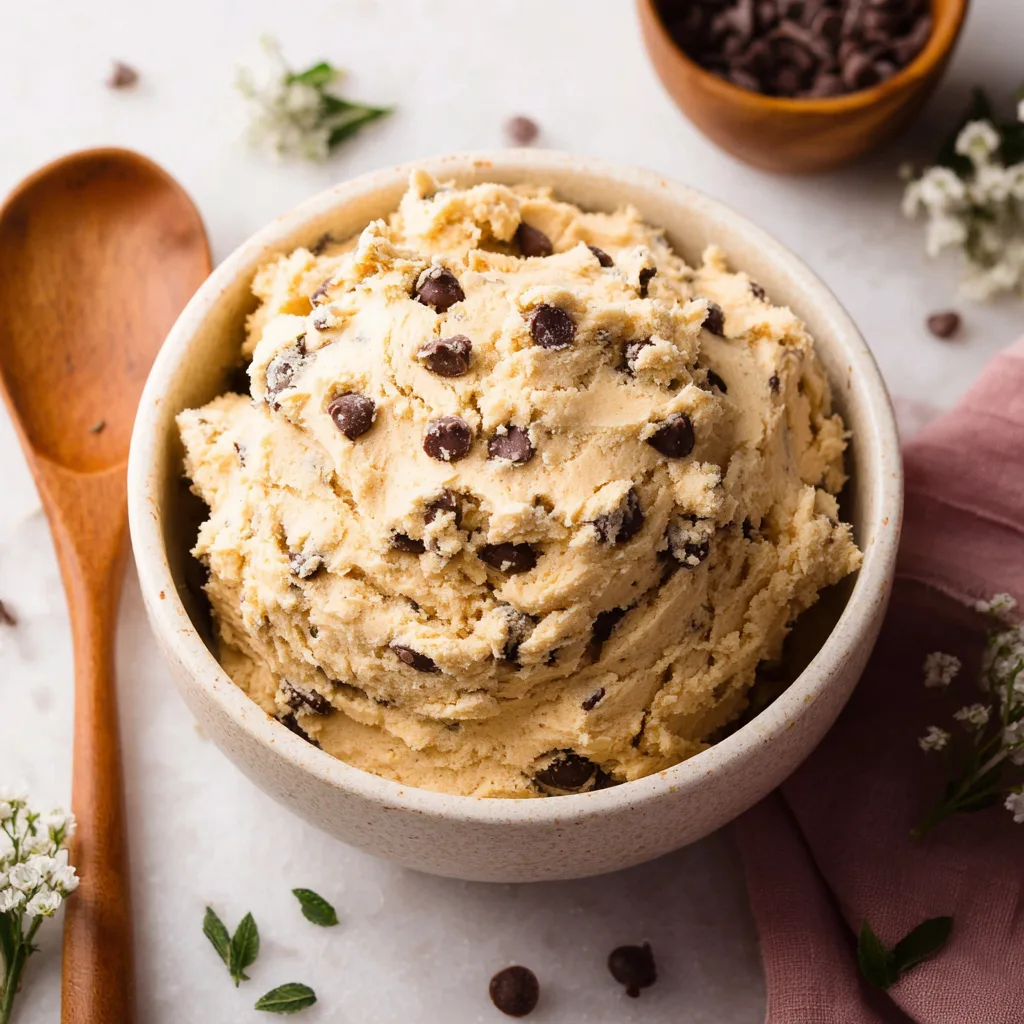
Can You Use Greek Yogurt?
Yes, Greek yogurt can be used in place of cottage cheese, but with some caveats. While both are high in protein, Greek yogurt has a thinner texture and tangier taste compared to the creaminess of blended cottage cheese. If you substitute yogurt in cottage cheese cookie dough, expect a slightly looser consistency.
To help mimic the thick texture of the original recipe:
- Use full-fat or strained Greek yogurt
- Reduce the amount of liquid sweetener
- Increase almond flour or protein powder as needed
Other Alternatives to Try
If you’re avoiding dairy or prefer something different, you can experiment with:
- Dairy-free Greek-style yogurt (e.g., coconut or almond-based)
- Silken tofu for a neutral, protein-rich base
- Cashew cream (unsweetened) for added richness
Just note: Each swap will slightly alter the flavor and texture of your cottage cheese cookie dough. You may need to tweak the flour-to-liquid ratio for the ideal dough consistency.
When to Stick with Cottage Cheese
For best results, stick with blended cottage cheese. Its neutral taste and creamy finish are what make cottage cheese cookie dough so satisfying and protein-packed without the tang or wateriness other substitutes might introduce.
Role of Protein Powder – Do I Need It & Which Kind Should I Use?
Protein powder plays a functional and nutritional role in cottage cheese cookie dough. While it’s possible to make this recipe without it, using a quality vanilla protein powder enhances both the texture and the macro profile of this healthy, no-bake dessert.
Why Use Protein Powder?
Adding protein powder to your cottage cheese cookie dough thickens the mixture and gives it that classic cookie dough feel smooth, firm, and scoopable. It also significantly boosts the protein content, making each serving more satisfying and ideal for post-workout fuel or midday snacking.
If you skip it, the dough may be softer and slightly more runny, especially if you’re also using natural sweeteners and nut butters. To maintain structure without protein powder, you’ll likely need to increase almond flour or chill the dough longer.
Best Types of Protein Powder
The kind of protein powder you use in cottage cheese cookie dough matters. Here are the top options:
- Whey Protein Isolate: Light, neutral flavor, blends smoothly
- Plant-Based (Pea, Rice, Hemp): Great for dairy-free versions, adds subtle nutty flavor
- Vanilla or Unflavored: Vanilla enhances the cookie dough flavor, but unflavored works well if you’re adding cinnamon, chocolate chips, or other mix-ins
Avoid overly sweetened or flavored powders, as they can overpower the delicate balance of this naturally sweetened recipe.
How Much Should You Use?
Start with 1–2 scoops per batch. Too much can dry out your cottage cheese cookie dough, so balance with enough liquid or blend in a bit of almond milk or maple syrup if needed.
This small but mighty ingredient transforms your dough into a macro-friendly dessert that keeps you full longer, tastes amazing, and supports your protein goals.
Texture Fixes – How to Fix Runny or Thin Dough
If your cottage cheese cookie dough turns out too soft or runny, don’t worry it’s an easy fix. Because this no-bake recipe uses ingredients like blended cottage cheese, nut butter, and maple syrup, moisture levels can vary slightly. Luckily, there are several ways to adjust the texture and get your dough just right.
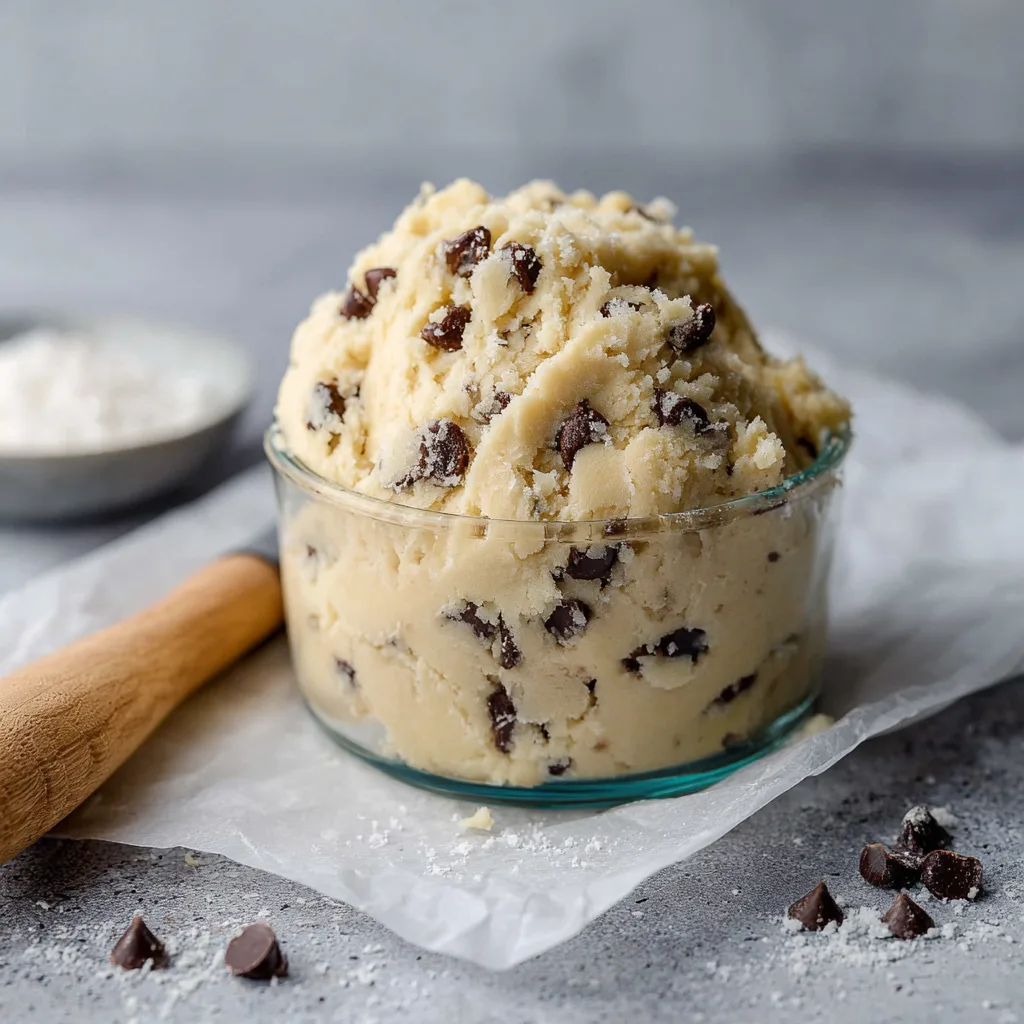
Common Causes of Runny Dough
- Too much blended cottage cheese
- Excess liquid sweetener like honey or maple syrup
- Low-protein or no protein powder, which helps bind
- Warm kitchen or soft nut butter
These factors can leave your cottage cheese cookie dough feeling more like a dip than dough. But you can bring it back to perfect scoopable consistency in just minutes.
For more low-carb, crowd-pleasing options, explore the Keto Fried Chicken recipe.
How to Thicken It Up
Here are the easiest ways to thicken cottage cheese cookie dough:
- Add more almond flour: This absorbs moisture and firms the texture without changing flavor.
- Increase protein powder: Adds structure and keeps the high-protein content balanced.
- Chill the dough: Refrigerate for 15–30 minutes to allow ingredients to firm naturally.
- Reduce nut butter slightly next time or choose a thicker one like almond or cashew butter.
Always make adjustments gradually. A tablespoon at a time of almond flour or protein powder is usually enough.
Avoiding Texture Issues in the Future
For consistently thick and creamy cottage cheese cookie dough, blend the cottage cheese until silky smooth, and measure liquid ingredients carefully. Also, opt for thicker nut butters and quality protein powders with good absorption.
With these quick fixes, your dough will go from drippy to dreamy in no time.
Flavor Variations & Mix‑Ins You Can Add
One of the best parts about cottage cheese cookie dough is how easily you can customize it. Whether you’re craving a chocolate fix, a snickerdoodle spin, or something nutty, this versatile high-protein dessert adapts to your flavor preferences with ease.
Popular Mix-In Ideas
Here are some delicious and nutritious additions that pair perfectly with cottage cheese cookie dough:
- Mini chocolate chips or cacao nibs for a classic cookie dough vibe
- Cinnamon + vanilla protein powder for a snickerdoodle twist
- Peanut butter chips or almond butter swirls for extra richness
- Chopped walnuts, pecans, or sunflower seeds for crunch
- Dried fruit like cranberries or chopped dates for chewiness
- Sea salt for a sweet-salty contrast
Each mix-in can completely transform the flavor while still keeping this no-bake dessert gluten-free and protein-packed.
Customizable Flavors
You can go even further by experimenting with spices, extracts, and textures in your cottage cheese cookie dough:
- Snickerdoodle High-Protein Cookie Dough: Cinnamon, vanilla, and nutmeg
- Peanut Butter Chocolate Chip: Natural peanut butter and dark chips
- Choco-Coconut Dream: Shredded coconut, chocolate chips, and coconut extract
- Pumpkin Spice Protein Dough: Canned pumpkin, cinnamon, cloves, and vanilla protein powder
These combinations offer a fresh take every time you make a batch perfect for meal-prep variety or a healthier indulgence that never gets boring.
Want a refreshing combo? Pair it with the Mango Coconut Water Smoothie for a tropical snack combo.
Pro Tip: Adjust Texture Accordingly
When adding mix-ins, you may need to slightly tweak your base recipe. More add-ins can thicken or loosen your cottage cheese cookie dough, so be sure to balance with extra almond flour or chill the dough before serving.
From indulgent dessert dips to bite-sized energy balls, the possibilities are endless with this versatile, macro-friendly treat.
Serving Suggestions – How Do You Eat It?
Cottage cheese cookie dough isn’t just for sneaking spoonfuls from the bowl though that’s perfectly acceptable. This protein-packed treat is surprisingly versatile, making it easy to enjoy as a snack, dessert, or even part of a balanced meal. Here are some creative and practical ways to serve it.
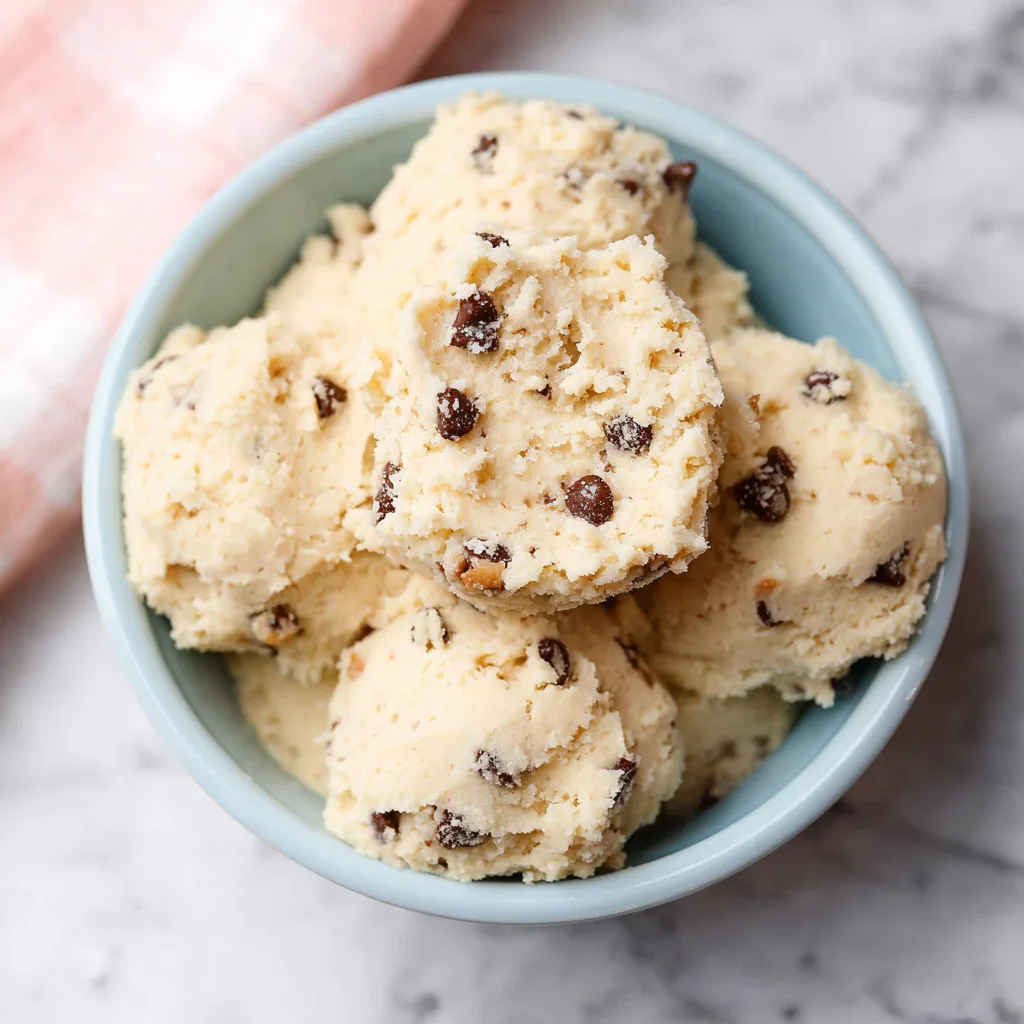
1. Eat It Straight from the Spoon
The most classic method just grab a spoon and dig in. Since cottage cheese cookie dough is safe to eat raw, you can enjoy it as soon as it’s mixed. Chill it first for a firmer bite or enjoy it soft and creamy right away.
2. Roll into Cookie Dough Bites
Scoop and roll the dough into 1-inch balls for portable, bite-sized snacks. Store them in the fridge or freezer and pop one whenever you need a quick energy boost. These chocolate-chip cookie dough bites make excellent meal-prep options for the week ahead.
3. Serve as a Dessert Dip
Spread your cottage cheese cookie dough in a small bowl and use it as a dip for:
- Apple slices
- Banana coins
- Rice cakes
- Graham crackers
- Pretzel sticks
It’s a fun and family-friendly way to turn your healthy indulgence into a social snack.
4. Layer in a Parfait
Layer your dough with Greek yogurt, berries, or granola to make a high-protein parfait. This combo works for breakfast or dessert and offers a satisfying mix of creamy, chewy, and crunchy textures.
5. Stuff It into Dates or Strawberries
For an elegant twist, stuff a spoonful of cottage cheese cookie dough into pitted Medjool dates or halved strawberries. Drizzle with a bit of melted dark chocolate or dust with cinnamon for a fancy-looking yet easy-to-make treat.
6. Spread It on Toast or Rice Cakes
Slather it over a slice of whole grain or protein bread for a snack with staying power. Top with sliced bananas or a sprinkle of chia seeds for extra nutrients and flavor.
However you choose to enjoy it, this no-bake dessert delivers flavor, flexibility, and fuel in every bite.
Dietary Compatibility – Is It Gluten-Free, Dairy-Free, Nut-Free, Keto-Friendly?
Cottage cheese cookie dough is more than a delicious treat it’s a recipe that can be adapted to fit a wide range of dietary needs. Whether you’re gluten-free, dairy-free, nut-free, or following a low-carb or keto lifestyle, this no-bake dessert has room for customization.
Is It Naturally Gluten-Free?
Yes! By using almond flour or coconut flour, cottage cheese cookie dough is naturally gluten-free. These flours not only create a soft, scoopable texture but also offer added protein and fiber.
Avoid traditional wheat flour or cookie mixes, which may contain gluten and require baking. Stick with gluten-free certified products to be sure if you have a sensitivity or celiac disease.
Can It Be Made Dairy-Free?
While cottage cheese is a dairy product, you can create a dairy-free version by substituting with:
- Dairy-free Greek-style yogurt (coconut or almond base)
- Cashew cream or silken tofu for a creamy alternative
Keep in mind: the flavor and texture will differ slightly, but with the right balance of almond flour and protein powder, you’ll still get a satisfying, spoonable dough.
Nut-Free Option
To make cottage cheese cookie dough nut-free:
- Replace almond flour with oat flour or sunflower seed flour
- Use sunflower seed butter instead of peanut or almond butter
Always check for cross-contamination if you’re working with allergies.
Is It Keto-Friendly?
Yes, with a few tweaks! To make your cottage cheese cookie dough keto-friendly:
- Use almond flour or coconut flour
- Choose a keto-approved sweetener like monk fruit or erythritol
- Opt for a low-carb protein powder
These changes maintain the rich flavor and texture while keeping your net carbs in check.
Macro-Friendly by Design
With the right ingredients, this recipe becomes a macro-friendly dessert: low in sugar, high in protein, and flexible for nearly every eating style. Whether you’re tracking macros, avoiding allergens, or just want a clean, healthy indulgence, cottage cheese cookie dough fits right in.
Looking for full meals too? The Big Mac Salad (Keto & Low‑Carb) is a great keto-friendly option to round out your menu.
Choosing Your Flours – Almond, Coconut or Oat – Which Works Best?
The type of flour you choose for your cottage cheese cookie dough can make all the difference in taste, texture, and dietary compatibility. While almond flour is the go-to base in most recipes, coconut and oat flour offer great alternatives depending on your preferences and nutritional needs.
Almond Flour: The Ideal Base
Almond flour is the most popular choice for cottage cheese cookie dough. It’s naturally gluten-free, low in carbs, and high in healthy fats, which makes it perfect for keto-friendly and high-protein desserts. Its slightly nutty flavor complements the creaminess of cottage cheese, and the fine texture creates a dough that feels just like traditional cookie dough.
Best for: Keto, gluten-free, low-carb, paleo-friendly versions.
Coconut Flour: Light but Absorbent
Coconut flour is another gluten-free option, but it behaves differently. It’s more absorbent than almond flour, so you’ll need to use less of it usually about one-third of the amount called for in almond flour.
To use coconut flour in cottage cheese cookie dough:
- Start with 1–2 tablespoons
- Add more liquid (e.g., almond milk or nut butter) to balance dryness
Best for: Coconut-flavored variations, nut-free or lower-fat alternatives.
Oat Flour: Soft and Nut-Free
Oat flour is a good option if you’re avoiding nuts but still want a soft, doughy consistency. It’s slightly higher in carbs but still offers fiber and whole-grain benefits. You can make it at home by blending rolled oats until fine.
When using oat flour in cottage cheese cookie dough, expect a milder flavor and a slightly denser result.
Best for: Nut-free adaptations, meal-prep friendly batches for kids.
Flour Swapping Tips
- Always add dry ingredients gradually to reach your ideal consistency.
- Combine almond and coconut flour for a balanced flavor and structure.
- Taste and texture may shift depending on your protein powder and sweeteners, so adjust accordingly.
Choosing the right flour lets you personalize your cottage cheese cookie dough for your goals whether that’s keto, nut-free, or something in between.
Sweeteners – Maple Syrup, Honey or Monk Fruit
Choosing the right sweetener can completely change the flavor profile and dietary fit of your cottage cheese cookie dough. Whether you’re looking for something natural, low-glycemic, or keto-approved, there’s a sweetener that works for your lifestyle and taste buds.
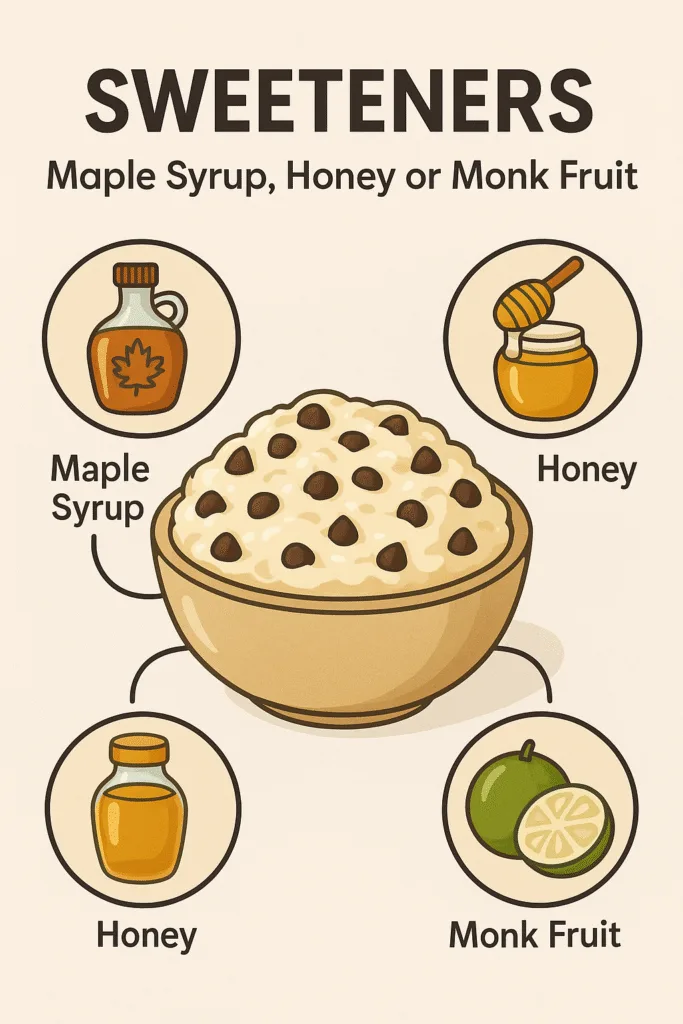
Maple Syrup: Natural and Smooth
Maple syrup is one of the most popular choices for sweetening cottage cheese cookie dough. It’s naturally derived, blends easily, and adds a smooth caramel-like note without overpowering the other ingredients.
Use pure maple syrup for the cleanest flavor, and remember that a little goes a long way. It’s great for those avoiding refined sugar but still wanting a rich, full-bodied sweetness.
Honey: Rich and Balanced
Honey provides a thicker, more floral sweetness and adds a slight chewiness to your cottage cheese cookie dough. It also brings beneficial antioxidants and antibacterial properties, making it a good choice for immune support.
However, honey is a bit stickier and denser, so use slightly less than maple syrup to prevent the dough from becoming overly moist.
Monk Fruit: Keto-Friendly and Low-Carb
For those on a low-carb or ketogenic diet, monk fruit sweetener is an excellent zero-sugar alternative. It has no calories, doesn’t raise blood sugar, and works well in cottage cheese cookie dough when paired with almond or coconut flour.
Use a liquid monk fruit sweetener or blend with erythritol for a more rounded sweetness. Be cautious monk fruit can have a cooling aftertaste if overused.
Which Sweetener Should You Choose?
- For balanced sweetness: Maple syrup
- For a classic texture and deeper flavor: Honey
- For sugar-free and keto diets: Monk fruit or stevia blends
Each sweetener adds a unique twist, allowing you to personalize your cottage cheese cookie dough for taste, texture, and nutritional goals.
Freezing Instructions – Can I Freeze Cottage Cheese Cookie Dough?
Freezing is a fantastic way to extend the shelf life of your cottage cheese cookie dough without sacrificing taste or texture. Whether you’re prepping a large batch for future snacks or just want to save some for later, freezing this high-protein dessert is easy and effective.
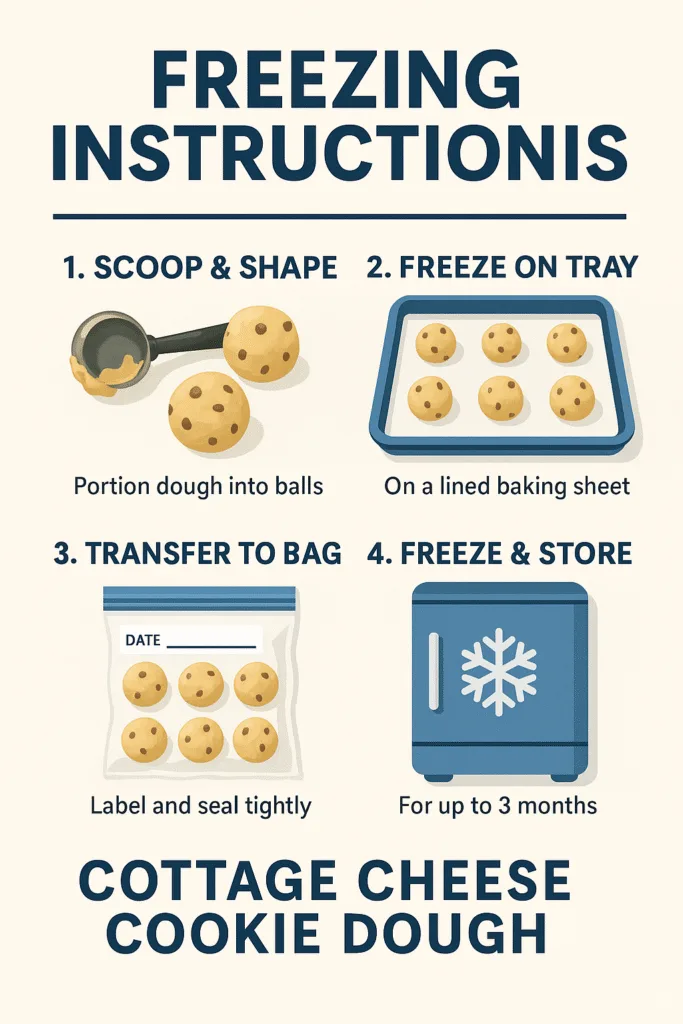
How to Freeze It
To freeze cottage cheese cookie dough:
- Portion the dough into bite-sized balls or flatten into a slab.
- Place on a parchment-lined tray and freeze for 1–2 hours until solid.
- Transfer to a sealed container or freezer-safe bag and store for up to 3 months.
This method prevents sticking and makes it easy to grab a serving anytime you need a quick, healthier indulgence.
Thawing and Serving
When ready to eat, take your cottage cheese cookie dough out of the freezer and:
- Let it thaw at room temperature for 10–15 minutes for a soft bite
- Or transfer to the fridge overnight for a firmer texture
You can also enjoy the frozen dough like cookie dough ice cream bites cool, chewy, and satisfying.
Texture Tips
Freezing may firm up the dough slightly, but the texture returns beautifully once thawed. If it feels dry, stir in a touch of nut butter or maple syrup to restore softness.
Freezing also makes this no-bake dessert meal-prep friendly, perfect for portion control and macro planning throughout the week. Perfect for busy weeks—also check our 2025 Healthy Weight‑Loss Recipes Guide to stock your kitchen smartly.
With freezing, you can enjoy cottage cheese cookie dough whenever the craving hits fresh, satisfying, and ready when you are.
Health Benefits of Cottage Cheese
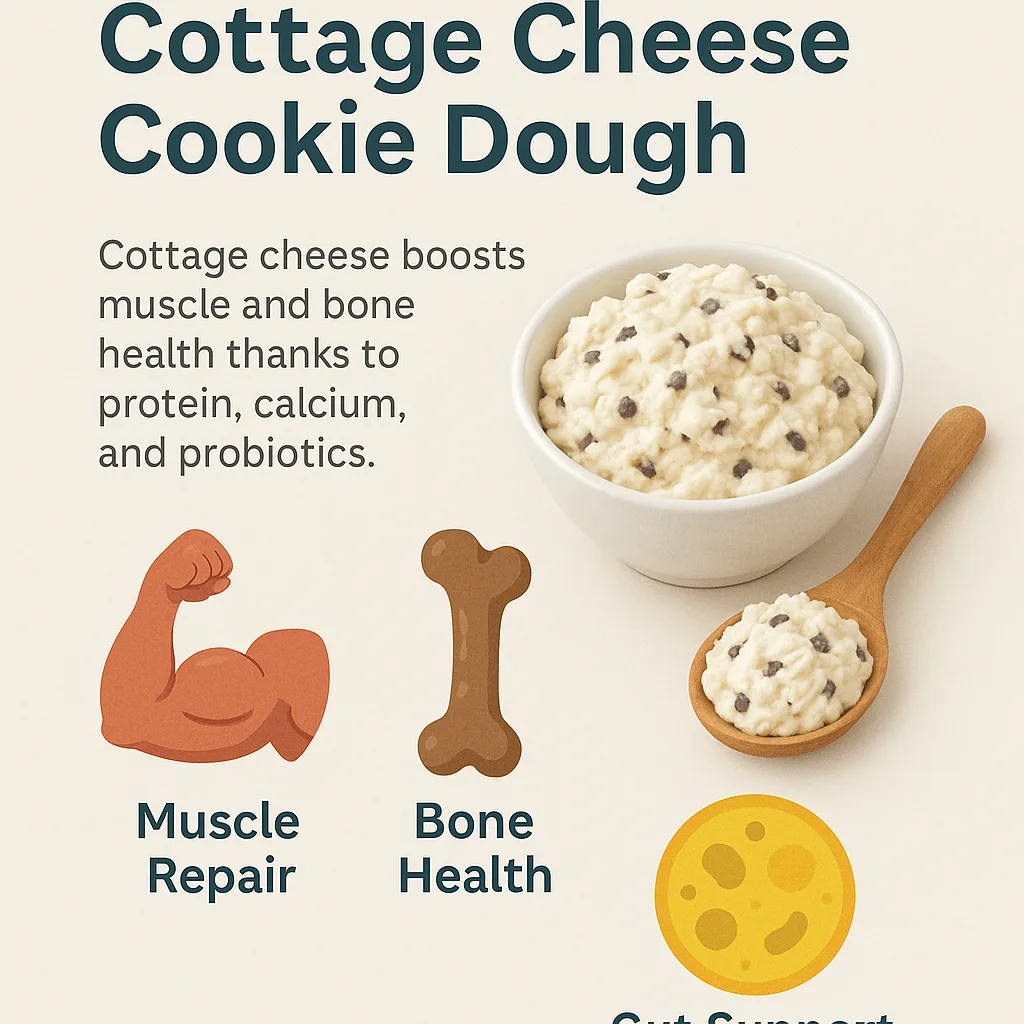
Cottage cheese is more than just a creamy base, it’s a nutritional powerhouse that makes cottage cheese cookie dough a smarter way to satisfy your sweet tooth. Packed with protein, calcium, and other essential nutrients, it supports everything from muscle recovery to bone health. And for a savory, high-protein twist, check out the Cottage Cheese Queso High-Protein Dip.
High Protein Content
A half-cup of cottage cheese provides approximately 12–15 grams of protein, making it a perfect foundation for high-protein desserts. In cottage cheese cookie dough, that protein content helps keep you fuller longer, supports lean muscle mass, and balances your macros especially when combined with almond flour and vanilla protein powder.
Calcium and Bone Support
Cottage cheese is rich in calcium, which is vital for strong bones and teeth. It also contains phosphorus and selenium, important for energy production and immune support. Adding this ingredient to your dessert isn’t just about flavor, it’s a real nutritional win. (ZOE explains why cottage cheese is packed with protein, calcium, and probiotics that support gut and bone health.)
Gut-Friendly Benefits
Cottage cheese contains live cultures (if labeled with “active cultures”), which support digestive health. These probiotics help improve gut function and nutrient absorption, giving your cottage cheese cookie dough a wellness boost from the inside out.
For wellness-enhancing drinks, try the Purple Peel Weight‑Loss Drink recipe.
Low in Sugar and Carbs
Most cottage cheese varieties are naturally low in carbohydrates and contain no added sugars, making them ideal for keto-friendly, refined sugar-free treats. When paired with monk fruit or maple syrup, your cottage cheese cookie dough stays sweet without spiking blood sugar.
Choose the Right Kind
For best results:
- Go for full-fat if you want a rich, creamy texture
- Choose low-fat for fewer calories and lighter macros
- Look for organic or grass-fed brands when possible
Incorporating cottage cheese into your no-bake desserts gives you all the benefits of a nutrient-dense ingredient wrapped up in a delicious, customizable treat.
Best Type of Cottage Cheese – Full-Fat or Low-Fat?
Choosing the right type of cottage cheese can elevate the texture, flavor, and nutritional profile of your cottage cheese cookie dough. Whether you’re after creaminess, lighter macros, or better flavor balance, your choice of full-fat or low-fat cottage cheese matters.
Full-Fat Cottage Cheese: Creamy and Satisfying
Full-fat cottage cheese creates a richer, creamier base for your cottage cheese cookie dough. Its higher fat content lends a smoother mouthfeel and more indulgent taste, making your no-bake treat feel like a true dessert.
It’s ideal if:
- You want a dessert that feels decadent
- You’re following a keto or low-carb diet
- Texture and flavor are your top priorities
Low-Fat Cottage Cheese: Lighter and Leaner
Low-fat cottage cheese is a great option if you’re watching calories or fat intake. It still offers a solid amount of protein but has a slightly more watery consistency.
To make low-fat cottage cheese cookie dough work:
- Blend it well until ultra-smooth
- Use a touch more almond flour or protein powder to thicken
This version is better for macro-friendly meal prep where portion control and nutritional targets are key.
Texture Tips by Fat Type
Regardless of fat content:
- Blend until completely smooth to avoid graininess
- Drain excess liquid if the cheese seems too wet
- Always chill before serving for firmer texture
Final Verdict
Both full-fat and low-fat work for cottage cheese cookie dough, your choice depends on whether you want creamy decadence or lean nutrition. Either way, you’ll end up with a high-protein, customizable dessert that fits your goals and satisfies your cravings.
Frequently Asked Questions About Cottage Cheese Cookie Dough
What ingredients do I need and how do I make cottage cheese cookie dough?
To make cottage cheese cookie dough, you’ll need blended cottage cheese, almond flour, vanilla protein powder, maple syrup or honey, nut butter, and optional mix-ins like chocolate chips or cinnamon. Blend, mix, and chill for a quick, no-bake high-protein dessert.
Can cottage cheese cookie dough be baked into cookies or is it meant to be eaten raw?
Cottage cheese cookie dough is designed to be eaten raw, thanks to its egg-free, gluten-free ingredients. While you can bake it with slight adjustments, it’s best enjoyed as a creamy, scoopable no-bake treat.
How should I store cottage cheese cookie dough and how long does it last?
Store cottage cheese cookie dough in an airtight container in the fridge for up to 5 days, or freeze for up to 3 months. Let it soften at room temp before serving if chilled.
Is cottage cheese cookie dough healthy or high in protein?
Yes! Cottage cheese cookie dough is rich in protein from cottage cheese and protein powder, and free from refined sugars. It’s ideal for a healthier indulgence or post-workout snack.
Can I use Greek yogurt or other substitutes instead of cottage cheese?
Yes, but the texture and taste will change. Greek yogurt is tangier and thinner, while silken tofu or dairy-free yogurts can work too. Adjust flour or protein powder for consistency.
Do I need protein powder and what kind should I use?
While optional, protein powder improves texture and boosts macros. Use vanilla whey or plant-based powder for the best results in cottage cheese cookie dough.
How do I fix runny or thin cottage cheese cookie dough?
Add more almond flour or protein powder, or chill the dough. These methods thicken it without altering the flavor or nutrition.
What mix-ins or flavour variations can I add?
Try chocolate chips, cinnamon, chopped nuts, coconut flakes, or dried fruit. Cottage cheese cookie dough is highly customizable to suit your cravings.
How do you eat cottage cheese cookie dough (serving suggestions)?
Spoon it straight from the bowl, roll into bites, serve as a dessert dip, layer into parfaits, or stuff into dates or strawberries. It’s a versatile, no-bake delight.
Is the recipe gluten-free, dairy-free, nut-free or keto-friendly?
Cottage cheese cookie dough is naturally gluten-free and can be adapted to be dairy-free, nut-free, or keto with the right ingredient swaps.
Which flour works best – almond, coconut or oat?
Almond flour is ideal for structure and nutrition. Coconut flour is low-carb but absorbent, while oat flour is great for nut-free versions. Each can work in cottage cheese cookie dough with slight adjustments.
Which sweetener can I use – maple syrup, honey or monk fruit?
Maple syrup and honey are natural sweeteners, while monk fruit is keto-friendly and sugar-free. All can sweeten cottage cheese cookie dough choose based on your dietary needs.
Can I freeze cottage cheese cookie dough?
Absolutely. Portion and freeze cottage cheese cookie dough for up to 3 months. Thaw at room temp or enjoy slightly frozen for a chewy, ice cream-like treat.
What are the health benefits of cottage cheese?
Cottage cheese offers protein, calcium, and probiotics. It supports muscle recovery, bone health, and gut wellness all while making your cookie dough nutritious.
What type of cottage cheese should I use – full-fat or low-fat?
Use full-fat for creamier texture, or low-fat for lighter macros. Both work well in cottage cheese cookie dough when blended smooth and balanced with dry ingredients.
Conclusion
Cottage cheese cookie dough offers an irresistibly creamy, high‑protein, and customizable dessert alternative you can feel good about. Whether you choose almond flour for keto-friendly texture, a natural sweetener like maple syrup or monk fruit, or a decadent mix‑in like chocolate chips or snickerdoodle spices, this recipe adapts to your taste and nutrition goals. Ideal for meal-prep, freezer-friendly snacks, or a no-bake dessert dip, cottage cheese cookie dough brings indulgence and wholesome ingredients together in one satisfying bite.
Give this recipe a try and experiment with variations like peanut butter swirls, fruit mix‑ins, or keto tweaks. For more delicious, healthy dessert ideas including cookies and snacks that keep you balanced check out the Healthy Edible Cookie Dough recipe on Viva Lyze.
Want more inspiration? Follow Viva Lyze on Facebook for daily wellness ideas and dessert recipes, and visit Viva Lyze on Pinterest to discover beautifully curated, health-boosting treats you’ll love.